

FLIGHT OCTOBER 2025 TECNOTRUF
In October 2025, a new multispectral drone flight equipped with sensors was carried out to capture high-resolution images of the plots that had been flown over in June: Cella, Adobes and Zucaina, in order to observe the evolution of the PRI index (Photochemical Reflectance Index, that informs about the photosynthetic efficiency of plants) on the crowns of the holm oaks and to be able to compare these values with those taken in the field.
The analysis was combined with the NDVI (Normalized Difference Vegetation Index, that shows the vegetative vigour of plants) to precisely delimit the holm oaks and assess the health and heterogeneity of the canopy.
Results by plot
Cella plot: comparing PRI data between June and October shows a 2% increase. This indicates a slight physiological improvement in holm oaks, which may be due, among other causes, to recovery from the water stress suffered in summer and milder temperatures.
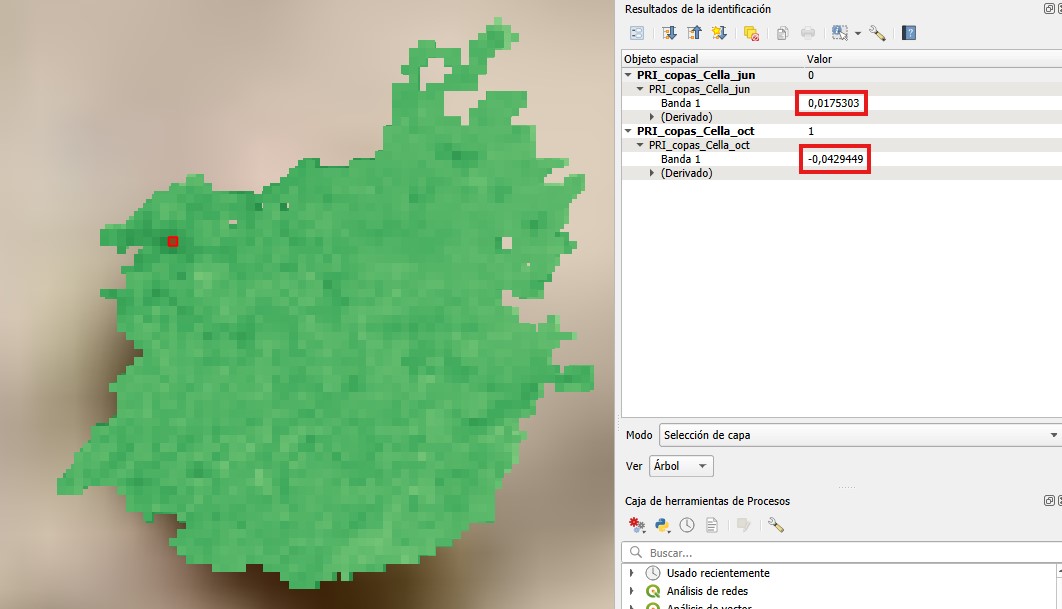
Figure 1: Example of PRI results for the same pixel in the Cella plot
Adobes plot: a comparison of PRI data between June and October shows a 1% decrease. This represents a slight reduction in photosynthetic efficiency, which may be due, among other things, to accumulated water stress during the summer or differences in management practices.
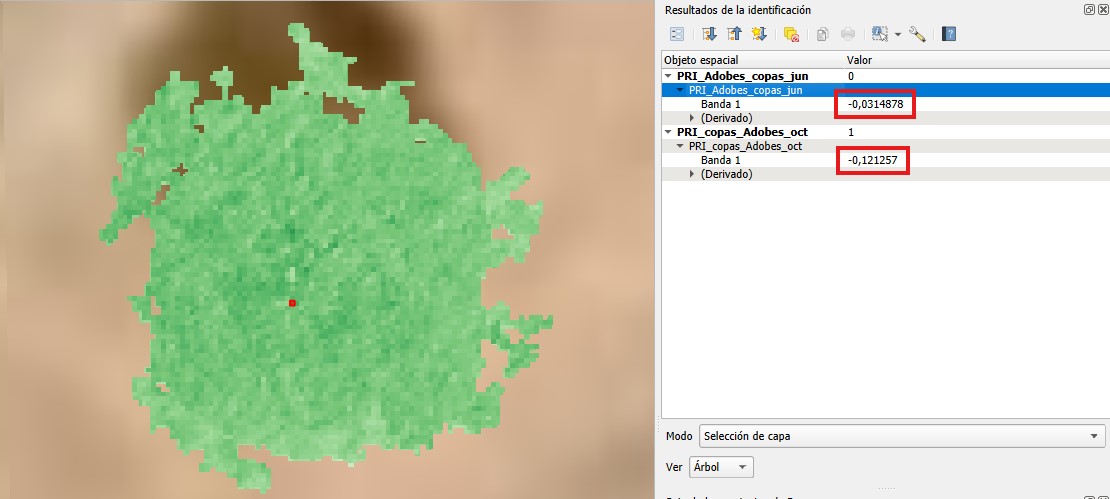
Figure 2: Example of PRI results for the same pixel in the Adobes plot
Zucaina plot: There has been a 7% increase in the PRI between June and October. This reflects a significant improvement in photosynthetic efficiency, indicating physiological recovery and reduced stress in the holm oaks.
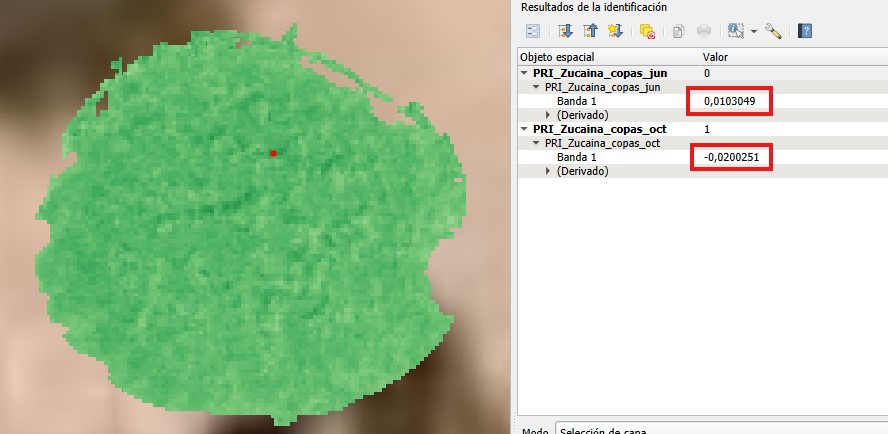
Figura 3: Ejemplo resultados PRI para un mismo píxel en la parcela de Zucaina
Overall results
The values obtained in the three PRI plots range from 0.1 to -0.3, indicating a variable physiological state that alternates between areas with good activity and others with some stress. This situation is consistent with the end of summer and transition to autumn.
Analysis method
We followed the same method for processing the drone images in October and June and the results obtained from both flights were compared.
- Creation of orthomosaics by band and plot. A total of 4 orthomosaics (2 bands for calculating the PRI and another 2 bands for calculating the NDVI) per plot. This makes a total of 12 orthomosaics.
- Rectification of georeferencing based on control points taken in the field.
- Calculation of NDVI.
- Reclassification of NDVI values to highlight the canopy of holm oaks.
- Polygonisation of NDVI values >0.40.
- Elimination of polygons with NDVI values >0.40 but which were not part of any canopy.
- Calculation of the PRI index for the entire plot.
- Extraction of the PRI values for each canopy from the polygons generated with the NDVI.
- Comparison of results with respect to the June flight.
The project has a budget of €599,131, co-financed by the European Agricultural Fund for Rural Development (EAFRD, 80%) and the Ministry of Agriculture, Fisheries and Food (MAPA, 20%).